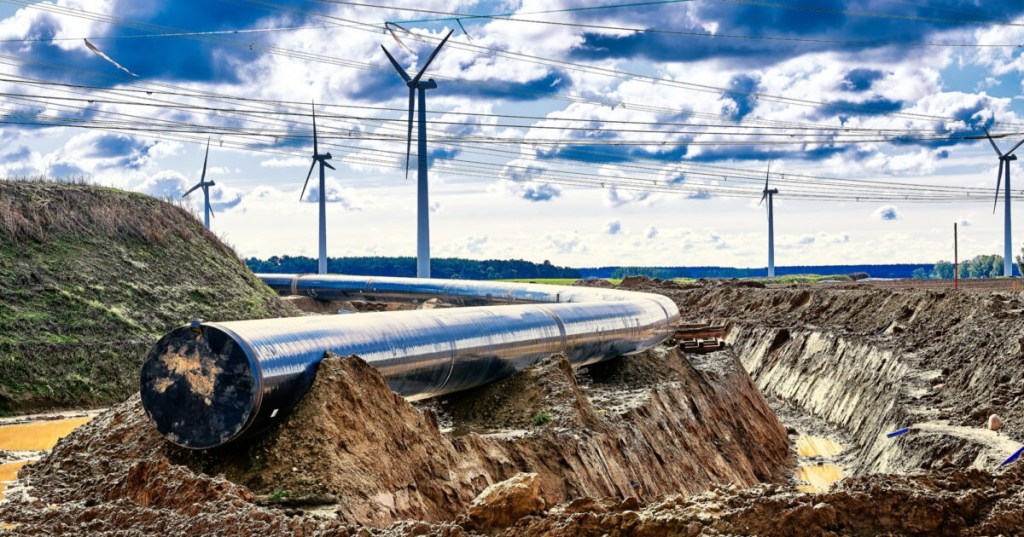
Despite enduring relentless Russian attacks on its energy infrastructure during nearly three years of war, Ukraine remained a reliable transit country for Russian gas to Europe. However, as of January 1, this is no longer the case. The gas transit agreement between Kyiv and Moscow has expired, and Russian state company Gazprom announced on Wednesday morning that it halted gas supplies via Ukraine as of 6:00 AM.
Ukraine has refused to renew the deal, a move that garners favor with its Western allies but stirs tensions with pro-Moscow European nations. Slovakian President Robert Fico recently threatened to cut electricity supplies to Ukraine if Slovakia cannot access Russian gas via Ukraine after 2025. Slovakia, which faces a potential €220 million annual increase in costs if forced to find alternatives, is one of the countries most affected. Meanwhile, Ukraine relies heavily on electricity imports from European countries to compensate for its devastated energy infrastructure.
Here’s an overview of the expired agreement and its consequences:
1. What Was the Agreement About?
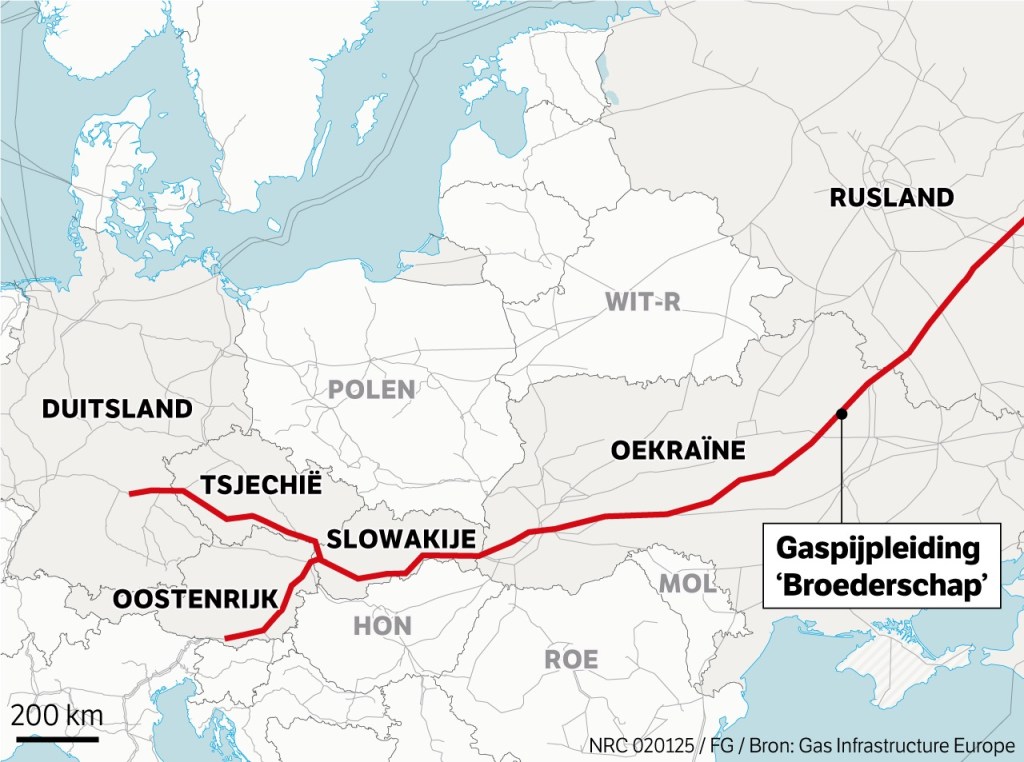
For over 40 years, Russia has transported natural gas to Europe via the Brotherhood Pipeline, which runs from Siberia through Ukraine, with the entry point at Sudzha near the Kursk region. From Ukraine, the pipeline supplies gas to Slovakia, where it splits toward the Czech Republic and Austria. In 2019, after tense negotiations, Russia and Ukraine reached an agreement to extend the pipeline’s use. That deal has now expired.
Gas volumes through the pipeline have significantly declined over the years. In 2022, around 15 billion cubic meters flowed through the pipeline—just 8% of the volume Russia exported to Europe in 2018–2019 via various routes. Since the invasion of Ukraine, many Western countries have rapidly reduced their reliance on Russian gas, shifting to alternatives from Norway, the U.S., and Qatar.
Nevertheless, Europe has not entirely moved away from Russian gas. Slovakia, Austria, Hungary, Italy, Slovenia, Croatia, and Moldova have continued to receive Russian gas via Ukraine, though only Slovakia, Austria, and Hungary still rely heavily on the Brotherhood Pipeline due to its relatively low cost.
2. Why Did Ukraine Refuse to Renew the Deal?
The transit agreement has been far more lucrative for Russia than for Ukraine, with revenues being funneled into Russia’s war effort. According to Reuters, Moscow earned about $5 billion from the deal this year, compared to less than $1 billion for Kyiv. Ukrainian President Volodymyr Zelensky indicated a willingness to renew the agreement, but only under the condition that payments to Russia be deferred until after the war. Moscow rejected this proposal outright.
3. What Are the Consequences of the Expired Deal?
The immediate impact on countries like Slovakia, Austria, and Hungary is not expected to be severe. These nations have prepared for this scenario, maintaining ample gas reserves and securing alternative routes like the TurkStream pipeline, which transports Russian gas via Turkey and the Black Sea. However, TurkStream’s capacity is limited and cannot serve everyone. Additionally, switching to alternative sources is more expensive. Increased demand for non-Russian gas has already driven prices up, with European gas prices peaking at €48 per megawatt-hour in late November.
The expiration of the transit agreement also exacerbates challenges for Moldova, which receives nearly all its gas via Ukraine. Much of this gas enters Moldova through the breakaway region of Transnistria, a Moscow-backed separatist territory, and is converted into cheap electricity. Moldova’s alternative import route through Romania faces hurdles, as Gazprom seems unwilling to use it. Moscow has also intensified pressure on Moldova, claiming unpaid debts of €700 million—a figure Moldova disputes, stating the actual amount is only €8 million.
For Russia, the loss of the transit agreement represents yet another financial blow. Gazprom recorded a net loss of €6.7 billion last year—the company’s first annual loss since 1999.
Geopolitical Ramifications
Ukraine’s decision to end the agreement underscores its determination to weaken Russia’s economic lifelines while strengthening ties with Western allies. However, the move also places pressure on European countries still reliant on Russian energy, highlighting the urgent need for diversification in energy supplies. As tensions rise, the future of European energy security will depend on continued cooperation and investment in sustainable alternatives.

 About Energy & Water
Leave a comment