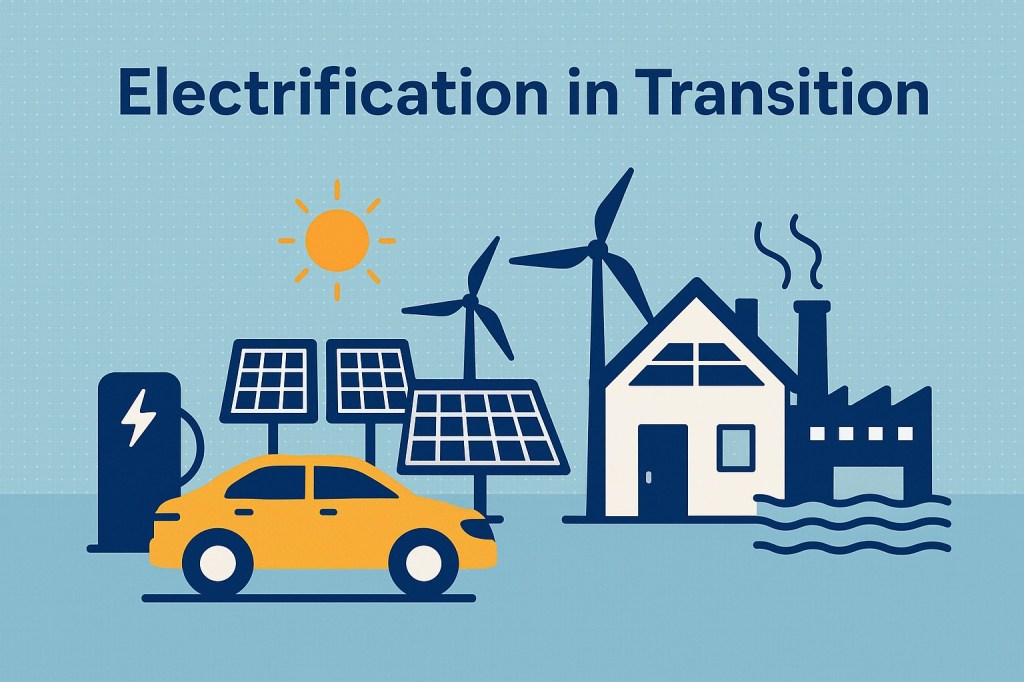
The way the Netherlands consumes electricity has changed profoundly in recent years. Despite the rise of electric vehicles (EVs) and data centers, total electricity consumption in the country remains below pre-pandemic levels. This paradox is the result of a dynamic and increasingly efficient energy landscape, where consumption patterns are shifting and distributed electricity production is gaining ground.
Total Energy Use Still Below Pre-COVID Levels
According to the Dutch national statistics office (CBS), total electricity consumption in the Netherlands reached 407 petajoules (PJ) in 2024—up 2% compared to 2023. Yet this figure still falls 3% short of the 2019 level, before the COVID-19 pandemic disrupted energy demand. This long-term dip is primarily due to improvements in energy efficiency, particularly in the agriculture and horticulture sectors.
One notable contributor has been the greenhouse horticulture sector, which has significantly reduced its demand for lighting energy. As a result, agriculture, forestry, and fishing collectively reduced their energy consumption by 25%between 2019 and 2024.
Electric Transport: Growing But Still Efficient
The biggest shift in consumption comes from domestic transport, which nearly doubled its energy demand to 17 PJ in 2024, compared to just 9 PJ in 2019. This increase is largely driven by the surge in electric vehicles. Remarkably, EVs now consume more electricity than the entire national fleet of trains, trams, and metros combined.
And yet, electric mobility remains highly energy-efficient. Despite nearly 1 million plug-in vehicles—over 10% of the total vehicle fleet—electric transport (including rail and EVs) accounts for just 4% of the country’s total energy use.
Data Centers: The Silent Power Consumers
At the same time, data centers are emerging as significant energy users. In 2024, large-scale server and cloud computing facilities consumed 22 PJ of electricity, a 50% increase compared to 2019. This growth is linked to the rise of cloud infrastructure, streaming services, and energy-intensive AI computations.
Households: Electrifying but Stabilized
Residential buildings used 75.5 PJ of electricity in 2024—approximately one-fifth of national electricity demand. This figure has remained relatively stable over the years, fluctuating between 75 and 80 PJ. The trend reflects a balancing act: while homes are becoming more energy efficient, electricity use per household is rising due to the electrification of heating systems and the decline in natural gas use.
Services, Waste & Water: The Largest Power Consumers
The biggest consumer of electricity is the broad services sector, which includes waste, water management, and repair industries. This category used 141 PJ in 2024, accounting for 35% of total national electricity demand. Compared to 2023, electricity consumption in this sector rose by 4%, underlining its growing role in the electrified economy.
Electricity Production: From Centralized to Distributed
In terms of supply, the Netherlands produced 443 PJ of electricity in 2024, which is just 1% more than in 2019. However, the origin of that electricity is rapidly changing. While the energy sector still accounts for 68% of total generation, a growing share comes from outside the traditional energy sector.
In 2019, just 22% of electricity production came from non-energy sector sources. By 2024, that figure had jumped to nearly 32%—a shift largely driven by the exponential rise in rooftop solar panels.
- Residential solar production has more than tripled, with households now responsible for 8% of total electricity generation.
- In the services sector, especially on business rooftops and industrial sites, solar electricity generation is now nearly three times higher than in 2019.
A System in Flux
These numbers paint a picture of a Dutch electricity system in flux. On the demand side, electrification is accelerating, especially in transport and digital infrastructure. But thanks to efficiency improvements and behavioral changes, total electricity demand remains contained. On the supply side, decentralized and renewable generation is reshaping the grid, making citizens and companies not just consumers but also producers of energy.
As the Netherlands continues to move away from fossil fuels, the challenge will be to maintain this balance—stimulating innovation and electrification while keeping overall demand and grid pressure in check.


 About Energy & Water
Leave a comment