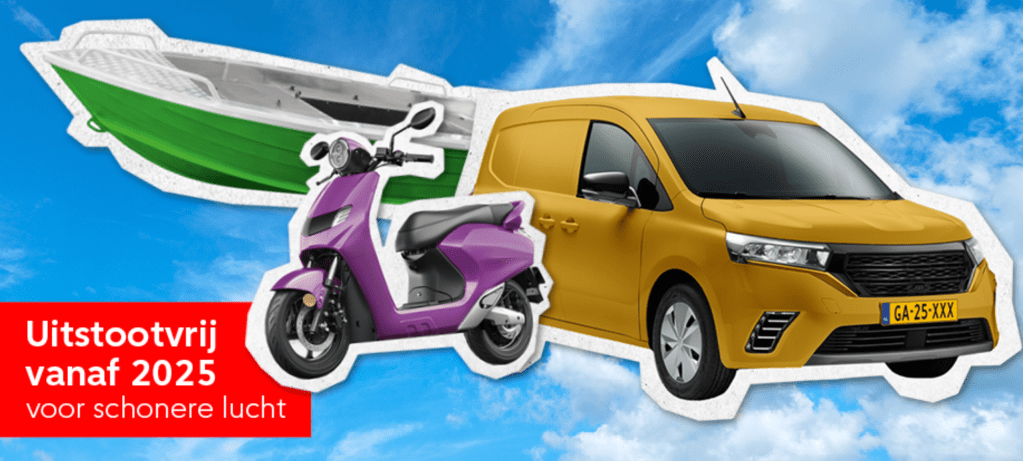
As of today, Amsterdam takes a significant step toward cleaner air and a healthier city. The introduction of zero-emission zones for delivery vans, trucks, mopeds, and scooters, along with stricter environmental rules for diesel cars, marks the culmination of years of preparation in collaboration with industry organizations, other municipalities, and the national government. While the goal of reducing air pollution is commendable, the policy places heavy burdens on small and medium-sized enterprises (SMEs), particularly tradespeople who rely on diesel vehicles for their daily operations.
What Are the New Rules?
The new regulations primarily affect three types of vehicles:
Cars
- The most polluting diesel passenger cars are now banned from the environmental zone within the A10 ring road.
Mopeds and Scooters
- New mopeds and scooters must be zero-emission within the A10.
- The oldest petrol-powered models are no longer allowed.
- Petrol-powered mopeds and scooters manufactured after 2018 can still operate within the zone until 2028.
Vans and Trucks
- Newly purchased delivery vans and trucks entering the zero-emission zone (the S100) must be emission-free.
- Existing fossil-fuel-powered vans and trucks, including hybrids, are no longer permitted in the zero-emission zone.
- Transition periods allow newer and cleaner vehicles to operate in the zone until a maximum of 2028.
A Heavy Burden on Small Businesses
While the initiative aims to create a healthier urban environment, many small business owners are struggling to adapt. For tradespeople like builders, electricians, and delivery services, their vehicles are essential tools of the trade. The requirement to replace fossil-fuel-powered vans with costly zero-emission alternatives is hitting them hard.
Electric vans are significantly more expensive than their diesel counterparts, and although subsidy programs and transition allowances are in place, they often fail to cover the full cost of replacement. Furthermore, many SMEs are already grappling with inflation, higher energy prices, and the lingering effects of the COVID-19 pandemic. For some, the added financial pressure could threaten their business viability.
Transition Plans and Exemptions: Enough?
Amsterdam has introduced several measures to ease the transition:
- Exemptions: Entrepreneurs who cannot yet make the switch can apply for exemptions.
- Scrappage Schemes: Incentives are available for scrapping older vehicles and purchasing new ones.
- Transition Periods: Depending on vehicle emission levels, some owners have until 2028 to comply.
However, these solutions are far from sufficient for many. For a small builder operating on tight margins, the time and costs associated with compliance, even with exemptions, remain a significant challenge. Additionally, the limited availability of charging infrastructure in the city adds another layer of complexity.
Balancing Clean Air and Economic Sustainability
The move toward cleaner air and healthier cities is undoubtedly important. Poor air quality has long been linked to serious health issues, and initiatives like Amsterdam’s new regulations are crucial steps in addressing climate change and public health concerns. However, policies must also account for their socioeconomic impact. For many SMEs, these regulations feel like a trade-off: environmental progress at the expense of their livelihood.
What Lies Ahead?
In the coming weeks, the city will implement signage for the new zones, with warnings replacing fines during an initial adjustment period. While these measures aim to educate and guide citizens, the reality remains that many small business owners face difficult decisions. For some, compliance might mean taking on debt to upgrade their vehicles, while others may choose to abandon operations within the city altogether.
As Amsterdam embarks on this ambitious journey toward a zero-emission future, it is crucial to continue supporting the affected entrepreneurs. Striking a balance between environmental goals and economic sustainability will ensure that cleaner air does not come at the cost of the city’s economic diversity and resilience.
For more information on the new regulations, exemptions, and support programs, visit Amsterdam.nl/uitstootvrij.


 About Energy & Water
Leave a comment