Amid headlines about delays, cost overruns, and political disagreements, the story of green hydrogen appears—at times—stuck between visionary ambition and sobering reality. Yet, if we step back from the news cycles and look at the hard numbers, another narrative emerges. Not one of failure, but of quiet, steady momentum. In fact, two key developments in recent months illustrate that the global transition to green hydrogen is far from a mirage. Rather, it is entering a new, more mature phase of development.
A 50-Gigawatt Pipeline: Europe Moves Forward
Let’s begin in Europe. As of early 2025, European hydrogen developers have submitted proposals for over 50 gigawatts of electrolysis capacity in response to the second call for the Important Projects of Common European Interest (IPCEI Hy2Infra) subsidy program. To put this in perspective: this is roughly 25 times the total installed electrolyzer capacity worldwide at the start of 2022.
These projects range from small-scale regional initiatives to mega-installations of several gigawatts each. Many are coupled with large-scale renewable energy investments, often in offshore wind or solar farms in Southern Europe or North Africa. The projects aim to deliver green hydrogen to industrial clusters in Germany, the Netherlands, Spain, and Italy—regions currently dependent on fossil-based hydrogen or natural gas.
Notably, these projects are not purely speculative. Their inclusion in IPCEI applications indicates a degree of financial, technological, and regulatory readiness. The project developers are not startups with PowerPoints; they are consortia that include major energy players such as RWE, Engie, Iberdrola, and Air Liquide.
The Gulf Region Bets Big—Again
The second major development comes from the Gulf. In December 2023, Saudi Arabia, the UAE, and Oman signed a trilateral agreement to create the Hydrogen Economic Alliance—a cross-border effort to develop shared infrastructure for green and blue hydrogen, ammonia exports, and CO₂ transport.
Unlike European subsidies, this is not a case of state support for private industry—it is state-led industrial policy in its purest form. The goal is geopolitical: the Gulf states aim to replace their dominance in oil markets with leadership in clean molecules. Backed by sovereign wealth funds and long-term off-take agreements with Asian and European buyers, the region is positioning itself as the future OPEC of Hydrogen.
Saudi Arabia’s NEOM project—a $500 billion mega-city powered by renewables—includes a 4 GW green hydrogen plant currently under construction, scheduled to come online in 2026. While timelines may slip, the sheer size and investment indicate long-term commitment.
Hype, Doom, and Reality
Green hydrogen has been caught in a swirl of expectations and criticism. At one end of the spectrum are utopian promises: clean fuels for airplanes, green steel, and energy storage that solves all intermittency problems. At the other end are media headlines focusing on delays, low capacity factors, and the energy loss in hydrogen’s production-to-use cycle.
Both views contain elements of truth—but both miss the bigger picture. We are witnessing the scaling phase of a critical technology, and as with all infrastructure revolutions—from railways to fiber optics—the process is non-linear. There will be delays. Some projects will fail. But the direction of travel is clear.
What the Critics Get Wrong
Many critiques focus on the current cost gap between green hydrogen and its fossil-based alternative (grey hydrogen from natural gas). Today, green hydrogen costs between €3 to €6 per kilogram, while grey hydrogen remains under €2/kg in most regions. But these numbers are already shifting.
Electrolyzer prices are falling, renewable electricity is becoming cheaper, and carbon pricing is increasing the cost of grey hydrogen. According to BloombergNEF, green hydrogen could be cost-competitive by 2030, especially in regions with abundant cheap solar or wind.
Furthermore, critics often ignore the demand pull from industry. Steelmakers (e.g., SSAB, ArcelorMittal), ammonia producers (e.g., Yara), and refineries are under regulatory and investor pressure to decarbonize. These sectors are not waiting for perfect economics—they are building now, to gain first-mover advantage and secure future market share.
The Bigger System Question: Molecules vs Electrons
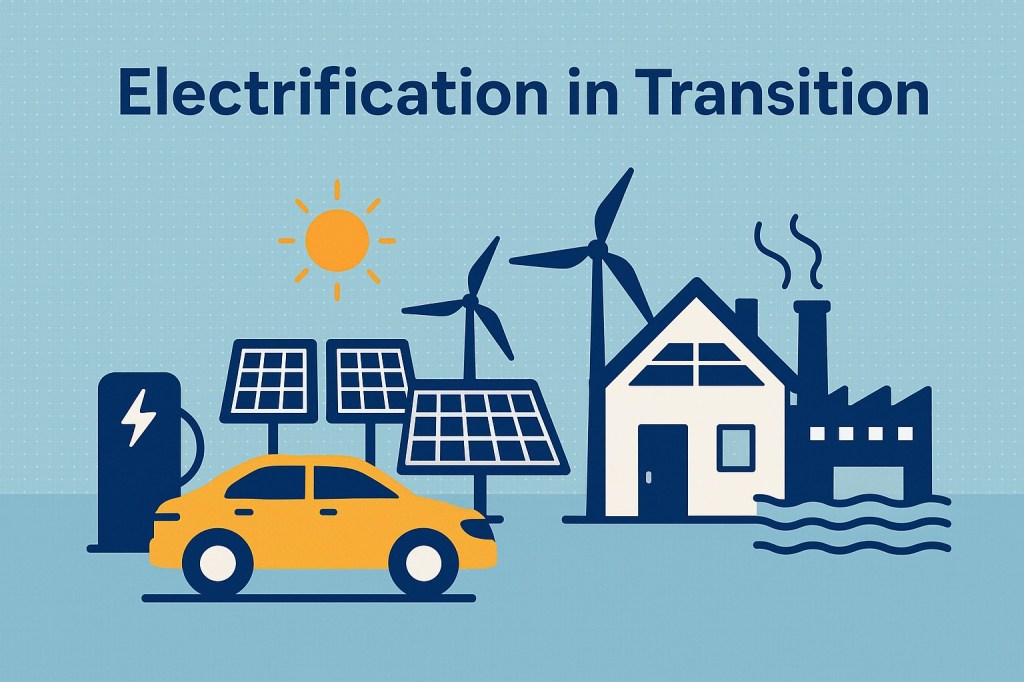
One of the deeper debates concerns the role of hydrogen in the energy system. Should we aim to electrify everything and use hydrogen only where direct electrification is impossible? Or should hydrogen be seen as a complementary energy vector, essential for sectors that require high energy density, seasonal storage, or chemical feedstocks?
In practice, both views are converging toward a middle ground. Direct electrification will dominate where possible (passenger cars, buildings), but hydrogen will play a pivotal role in:
- Heavy industry (e.g., iron, cement, chemicals)
- Maritime and aviation fuels (via e-methanol or SAF)
- Seasonal power storage
- Long-distance energy trade (e.g., hydrogen derivatives like ammonia)
The Infrastructure Catch-Up
The bottleneck is not only production—it is transport, storage, and regulation. Hydrogen needs pipelines, terminals, and certification schemes to become a global commodity. Fortunately, Europe is planning a dedicated hydrogen backbonewith over 28,000 km of pipeline by 2040, repurposing existing gas infrastructure. Ports like Rotterdam, Hamburg, and Algeciras are investing in import terminals for green ammonia.
Meanwhile, international certification schemes such as the CertifHy initiative are moving forward, ensuring that hydrogen produced in Australia or Namibia meets EU sustainability criteria.
Conclusion: Ignore the Noise, Follow the Investment
When technological transitions reach the stage where tens of billions are invested by both governments and global corporations, it’s no longer just a vision—it’s an unfolding reality. Green hydrogen is not a panacea, but it is becoming a critical part of the next-generation energy system, especially for hard-to-decarbonize sectors.
The story of hydrogen will not be written in tweets or newspaper headlines. It will be written in gigawatts, kilometers of pipeline, and terawatt-hours of decarbonized fuel. And that story is just beginning.
Sources:
- Change Inc. (May 2025): “De wereld gaat aan de groene waterstof.”
- BloombergNEF (2024): Hydrogen Market Outlook.
- Hydrogen Europe (2025): IPCEI Hy2Infra project summaries.
- International Energy Agency (2023): Global Hydrogen Review.

 About Energy & Water
Leave a comment