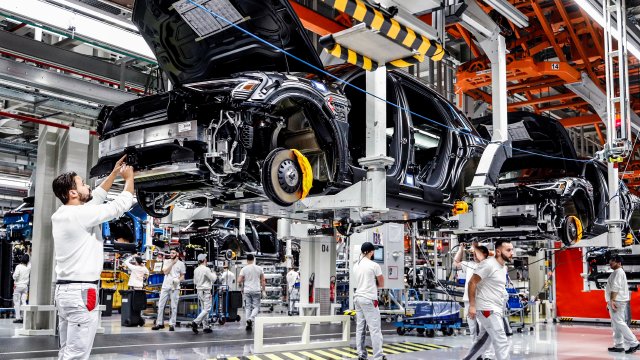
In an effort to revitalize the struggling European automotive industry, the European Commission will present its action plan on Wednesday. This initiative includes a stimulus program worth hundreds of millions of euros and a series of measures designed to restore the sector’s competitiveness in the electric age.
The Need for a Comeback
According to a leaked draft of the plan, Brussels aims to help the vital automotive industry reclaim its leading position. A revival is urgently needed, as the sector supports approximately 13 million direct and indirect jobs. European car manufacturers face immense pressure from fierce competition, particularly from China, and looming trade wars threaten to exacerbate job losses across the industry.
European automakers were once dominant in the era of internal combustion engines but have struggled to transition to electric vehicles (EVs). The main challenge lies in battery production—batteries account for 30% to 40% of a car’s value, yet European manufacturers lag behind in this crucial technology.
Addressing the Battery Deficit
To bridge this gap, the European Commission is introducing the so-called Battery Booster Package. Of the €3 billion allocated from the European Innovation Fund for climate technologies, €1.8 billion will be directed over the next two years to accelerate battery production. Additionally, EU member states will have increased flexibility to financially support their national battery industries.
The Commission is also earmarking €362 million for the development of next-generation batteries for EVs and trucks. This funding will also support the creation of a recycling industry for battery materials, ensuring a more sustainable supply chain.
According to the Commission, other global players heavily subsidize battery innovations with significant state aid. Europe is now following suit to remain competitive in the race for cutting-edge battery technology.
Delayed CO2 Regulations
Earlier this week, Commission President Ursula von der Leyen announced additional support measures, including a two-year extension for automakers to comply with strict European CO2 emission standards. Many manufacturers were at risk of failing to meet these targets, which could have resulted in billions in fines. The new deadline of 2027 provides much-needed relief for the industry.
The European Commission is also focusing on electrifying the trucking sector, aiming to put a substantial number of electric trucks on the road. To facilitate this transition, the Commission will invest €570 million over the next two years in a green corridor—a network of fast-charging stations for e-trucks along major European highways and transport hubs.
Boosting the Second-Hand EV Market
Another key concern is the reluctance of consumers to buy second-hand EVs due to fears over battery degradation. To address this, the Commission is proposing a European battery passport, which would provide transparent information about a battery’s health and remaining lifespan. This initiative aims to enhance consumer confidence in the pre-owned EV market.
Von der Leyen also stressed the need for significant investment in the development of autonomous driving technology. To accelerate progress, the Commission plans to relax European regulations governing testing phases for self-driving vehicles. Moreover, the EU aims to take the lead in developing superior automotive software solutions.
The Struggles of European Automakers
The difficulties faced by European car manufacturers were highlighted last week when Audi announced the closure of its Brussels plant, resulting in the loss of 3,000 jobs.
Audi, a subsidiary of Volkswagen Group, cited declining demand for electric cars as the primary reason for the shutdown, along with high logistics and production costs. The Brussels factory, which underwent a major renovation in 2018 to produce an electric Audi model, became unviable despite these investments.
The announcement sparked strong protests from employees and trade unions. However, despite their efforts to preserve jobs, Audi proceeded with the closure. Until last week, Audi had been the largest private employer in the Belgian capital.
A Critical Moment for Europe’s Automotive Future
With these ambitious measures, the European Commission aims to safeguard jobs, accelerate battery production, and strengthen Europe’s position in the global EV market. However, the success of this initiative will depend on whether European automakers can quickly adapt and leverage these support mechanisms to regain their competitive edge in the electric era.


 About Energy & Water
Leave a comment