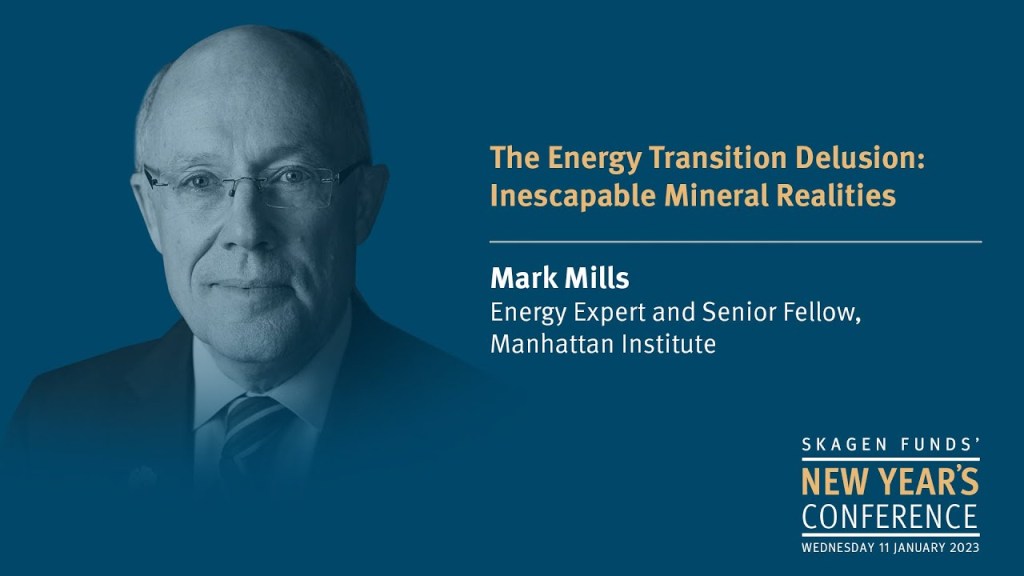
Hydrocarbons remain unparalleled as energy sources due to their low cost, high energy density, stability, and portability. Despite decades of innovation in renewable energy and storage technologies, no alternative matches their practicality or scalability. For example, a $1 million investment in large-scale wind turbines or solar panels generates approximately 50 million kilowatt-hours (kWh) of energy over 30 years. In contrast, a similar investment in a shale gas drilling operation produces over 300 million kWh in the same period—a sixfold difference.
This stark contrast highlights two key limitations of the idea that the world can rapidly transition away from hydrocarbons. First, energy sources cannot achieve the exponential improvements seen in digital technologies due to physical and chemical constraints. Second, no fundamentally new energy technology has been invented in nearly a century, underscoring the slow pace of transformative breakthroughs in this domain.
To replace hydrocarbons entirely within 20 years, global renewable energy production would need to increase by 90-fold—a monumental challenge given it took 50 years to scale global oil and gas production by a factor of ten. Achieving a fully renewable electricity grid by 2050 would require a construction program in the U.S. alone that is 14 times larger than the grid expansions of the past half-century.
The True Costs of Renewables
The economics of renewables pale in comparison to hydrocarbons when viewed through the lens of energy output and storage capabilities. For the cost of drilling a single shale gas well, one could construct two 2-megawatt wind turbines, each towering 150 meters. These turbines produce, on average, energy equivalent to 0.7 barrels of oil per hour. By comparison, the shale gas well delivers 10 barrels of oil per hour in energy-equivalent terms—an order-of-magnitude advantage sustained over decades.
Storage is another Achilles’ heel of renewable energy. While hydrocarbons like oil and natural gas can be stored at less than $1 per barrel-equivalent, battery storage costs approximately $200 per barrel-equivalent. The United States currently has sufficient hydrocarbon reserves in storage to meet two months of national demand. In contrast, the combined capacity of all batteries in the U.S. grid and electric vehicles can supply just two hours of demand.
To illustrate further, $200,000 worth of Tesla batteries—collectively weighing over 9,000 kilograms—are required to store the energy equivalent of a single barrel of oil, which weighs only 136 kilograms and can be stored in a $20 tank. Scaling battery production to meet even modest national storage needs reveals staggering challenges. For instance, Tesla’s Gigafactory, the largest battery manufacturing facility in the world, produces enough batteries annually to store just three minutes of U.S. annual electricity demand. Producing batteries to store two days of national demand would take 1,000 years at this production rate.
Material Demands and Embodied Energy Costs
Renewables also come with immense material and energy demands. Replacing the output of a single 100-MW natural gas turbine, which is about the size of a residential house and powers 75,000 homes, requires at least 20 wind turbines. Each of these turbines is as tall as the Washington Monument and occupies approximately 26 square kilometers.
The construction of wind and solar farms relies on vast amounts of concrete, steel, and glass—materials that require significantly more extraction and processing than hydrocarbons for equivalent energy output. For example, building a 100-MW wind farm requires 30,000 tons of iron ore, 50,000 tons of concrete, and 900 tons of non-recyclable plastics for turbine blades. Solar farms require 150% more materials per unit of energy compared to wind farms.
The demands for battery materials are even more daunting. Producing one kilogram of battery requires mining 50–100 kilograms of raw materials. Transitioning to a battery-dominated energy future would necessitate a 200% increase in global copper production and a 500% surge in the extraction of minerals like lithium, graphite, and rare earth elements—not to mention the dramatic expansion of cobalt mining.
The Embodied Energy of “Green” Machines
Renewable energy systems require significantly more “embodied energy” per unit of societal energy output compared to hydrocarbons. Embodied energy refers to the fuel used to extract, refine, and process raw materials into usable energy systems. For instance, natural gas accounts for 70% of the energy required to produce glass—a key material in solar panels. Wind turbines rely on oil and natural gas for their fiberglass blades, while coal is essential for producing the steel and concrete used in their foundations.
A hypothetical scenario in which wind turbines supply half of the world’s electricity would demand nearly 2 billion tons of coal for concrete and steel production, along with 1.5 billion barrels of oil for turbine blades.
Transportation logistics further amplify the embodied energy costs. Hydrocarbons benefit from highly efficient pipeline networks, which transport 75% of all oil and 100% of natural gas. By contrast, the materials for renewable energy systems are solid and transported primarily by truck—a process that increases energy transport costs by 1,000% per ton-kilometer compared to pipelines.
A Quest for the Impossible?
The global push toward a net-zero energy utopia often overlooks the practical and material realities underpinning such ambitions. The sheer scale of material extraction, embodied energy, and storage demands associated with renewables underscores the enduring importance of hydrocarbons in meeting global energy needs efficiently and sustainably. As policymakers and innovators strive to balance environmental goals with energy security, it is crucial to recognize that hydrocarbons—remarkably efficient, portable, and scalable—remain indispensable in the energy landscape.
- Mills, M. P. (2019). The New Energy Economy: An Exercise in Magical Thinking. Manhattan Institute.
- Mills, M. P. (2020). Mines, Minerals, and “Green” Energy: A Reality Check. Manhattan Institute.
- Mills, M. P. (2022). The “Energy Transition” Delusion: A Reality Reset. Manhattan Institute.


 About Energy & Water
Leave a comment