This is a translation from a Dutch blog post from 2018
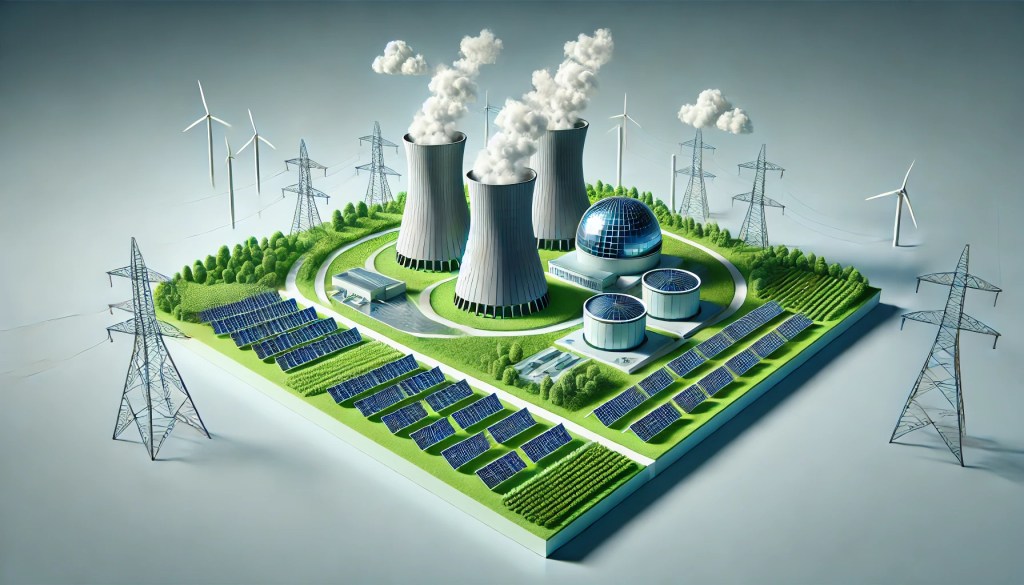
In August of this year, I wrote an initial piece about nuclear energy. In that article, I calculated that around 10% of global electricity production currently comes from 450 nuclear power plants. In the Netherlands, we have a nuclear power plant in Borssele with a capacity of 485 MW, which accounts for 3% of our electricity production. But let’s be honest: electricity makes up only 16% of our total energy consumption. As I’ve calculated before, we could feasibly provide all Dutch households with sustainable electricity. However, let’s be honest again: 80% of electricity is used by businesses and industry, leaving only 20% for households.
In the transition to sustainability, in addition to increasing wind and solar energy, we also need:
- Rapidly deployable power plants (running on biomass or gas).
- Possibly a few additional nuclear power plants in the Netherlands.
Before I hear the “hold on, Wouter” reactions again—yes, I am not opposed to a limited expansion of the number of nuclear power plants in the Netherlands. Not as a standalone solution, but as part of the mix. I’m not particularly concerned about radiation risks, nor am I worried about the waste problem.
The latter is well explained by Lubach op Zondag. Let’s aim for, say, 6 GW of capacity—twelve times more than Borssele currently produces. For example, two plants of 3 GW or three plants of 2 GW. The cost? Roughly €12 to €15 billion. That’s significant.
Where do my concerns lie? It’s simple:
- A lack of vision and decisiveness among our politicians.
- A lack of public support among the average Dutch citizen. And I get it—NIMBY (Not In My Backyard).
- Cost. Nuclear energy is incredibly expensive. Who is willing to take the risk?

 About Energy & Water